


Finding the best travel cot for a newborn usually starts with one awkward question: how much convenience can be added without making sleep feel unsafe or fussy? Some families need a lightweight travel cot that disappears into a car boot; others need a bedside crib-style setup for room sharing at grandparents’ houses. This guide cuts through the noise with review-led recommendations, practical testing insights, and clear trade-offs, so the shortlist makes sense whether the cot is for holidays, overnight stays, or as a backup sleep space at home.
Best Travel Cot for Newborns: Top Picks
Open with the main buying problem and who this guide is for
The biggest challenge with newborn travel sleeping is balancing portability with proper support. A newborn doesn’t need fancy extras, but they do need a flat, firm, ventilated sleep space that feels stable, easy to access, and simple to set up when everyone is tired. That is why this roundup focuses on comfort, ease of assembly, safe sleep, and real-world practicality rather than just headline features. It is aimed at parents who need a portable crib for short trips, occasional family visits, or a home backup cot that can also travel when needed.
Summarize the key winner types at a glance
The strongest all-rounder is usually the one that balances newborn support, portability, and quick folding without feeling flimsy. Budget buyers should look for a basic but reliable model that covers the essentials rather than paying for bells and whistles they may never use. Frequent travellers often benefit from a premium quick-fold design, while parents who want room-sharing away from home may prefer a bedside crib style with a raised newborn insert. Newborn inserts, good mesh sides, and a sensible carry bag matter most in this age group, while playpen functionality becomes more important later on.
How We Chose the Best Travel Cots
Explain the testing approach and selection criteria
The cots in this shortlist were compared across the features that affect everyday use most: setup speed, folding process, weight, mattress comfort, safety feel, and how easy each model is to carry once packed away. Newborn suitability carried extra weight, because a travel cot can look clever on paper and still be awkward for night feeds, post-birth recovery, or a sleepy one-handed transfer. Real-parent use cases also mattered, including holidays, weekends at grandparents’ houses, and unplanned overnight stays where the cot needs to be easy to assemble quickly and sleep well straight away.
Clarify what “best” means in this roundup
“Best” is not a single answer here. For some families, it means the most portable travel cot for flights and stairs; for others, it means a roomier sleep space with a newborn bassinet or bedside crib mode. Premium picks may be worth it for parents who travel often, while value picks make more sense for occasional use. Durability also influenced rankings, especially where a cot could handle a baby or toddler from birth to 15kg or from birth to three years. Comfort and ease of use matter most when energy is low and everything needs to work first time.
Best Travel Cots at a Glance
Create a fast comparison snapshot
| Pick | Best for | Approx. price | Approx. weight | Age suitability |
|---|---|---|---|---|
| Bababing Bedside & Travel Crib/Cot | Best Overall | £150-£175 | Moderate | Newborn to 6 months or 9Kg |
| Silver Cross Slumber | Best overall | £150-£200 | Moderate | Birth to toddler |
| Bugaboo Stardust | Best premium convenience | £180-£230 | Moderate | Birth to toddler |
| BabyBjörn Travel Cot Light | Best lightweight | £180-£220 | Very light | Birth to toddler |
| Red Kite Sleeptight | Best budget | £35-£60 | Light | Birth to toddler |
| Joie Kubbie Sleep | Best bedside-style | £90-£120 | Moderate | Newborn to toddler |
| Tutti Bambini CoZee Go | Best 3-in-1 value | £100-£140 | Moderate | Birth to toddler |
Use this snapshot to narrow choices quickly. The smallest folded dimensions are usually the easiest to tuck into a cupboard or car boot, while the lightest options suit public transport and stairs best. A compact travel cot can save space at home, but compactness often means less room for older babies. If a model includes a raised insert or bedside crib compatibility, it will usually be more helpful in the first months than a basic floor-level cot alone.
Highlight the decision differences that matter most
Newborn inserts and raised bassinets change how easy the cot is to use at 2 a.m., especially during feeds and settling. Mattress comfort also matters, though travel cot mattresses are typically thinner for safety and packability. Some models double as a playpen or changing table, which can be genuinely useful for longer stays, but those extras add bulk. If trips involve trains, stairs, or flights, the best lightweight travel cot may be worth more than a roomier model. For car travel, a slightly heavier but more comfortable sleep space can be the better trade-off. If you want that quick-fold convenience in a different style, the instant fold bedside crib and travel cot format can be worth comparing too.
Best Overall Travel Cots Reviewed
Review the top all-rounders in depth
The Silver Cross Slumber stands out as the most balanced choice for most families because it feels practical without being plain. It has a reassuringly solid frame, mesh sides for airflow, and a folding system that is easy to learn and quick enough once the steps become familiar. For newborn use, the sleep surface feels stable and the optional raised level improves access during the early weeks. The carry bag is sensible rather than flashy, and the cot packs down neatly for a model that also offers long-term toddler use. Its main drawback is that it is not the lightest travel cot on the market, so parents who lift it frequently up stairs may want something slimmer.
Comfort is where this model earns its place. The mattress is not hotel-level plush, but that is not the point; it is firm, flat, and supported well enough for safe sleep. The mesh sides help with visibility and ventilation, which makes a difference in warmer rooms or when checking on a newborn. The folding mechanism is more straightforward than many mid-range travel cots, and it does not feel like a puzzle every time it comes out of the carry bag. For a family that wants one cot to do most jobs well, this is the kind of model that just gets used.
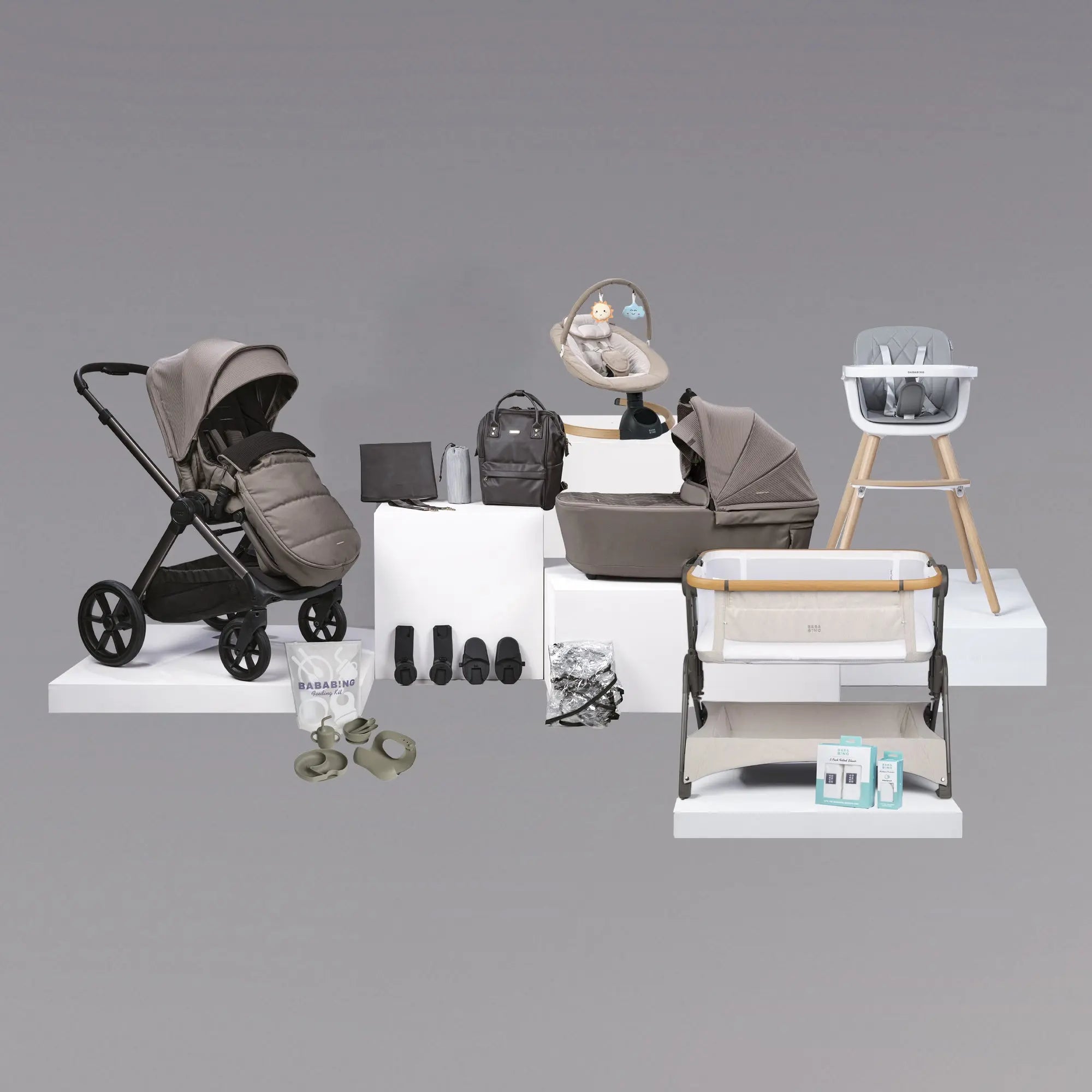
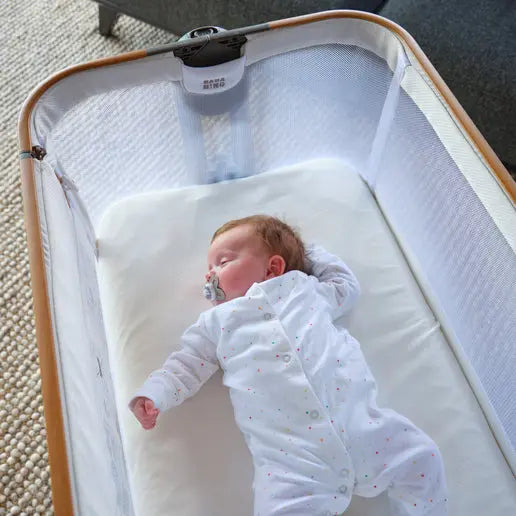
The bababing bedside and travel crib also offers a good choice based on the features it possesses such as; no assembly requirements, easy to assemble, multiple height positions which include 'tilting sides' for those babies who suffer from digestive issues such as; acid reflux. The mattress is well padded and the netted sides offer all round ventilation. The cot also comes with its very own carry bag, perfect for those weekend aways or overnight stays with the grandparents. The bababing bedside and travel crib is the one of its kind that has won prestigious awards with regards to the European 'Red Dot' Award for innovation design and the 'Goodhousekeeping' Guide for best bedside cribs in 2025.
Review the best premium convenience option
The Bugaboo Stardust is the premium convenience pick because setup is impressively fast and the quick fold design removes a lot of the usual travel cot friction. It opens and closes with the sort of speed that suits sleep-deprived parents who are trying to get a baby settled before the overtired meltdown starts. The build quality feels polished, and the mattress base is better integrated than on many rivals, which helps the whole sleep space feel more cohesive. For frequent travellers, that premium price can be justified by the ease of use alone.
As a newborn sleep space, it performs well because the frame feels secure, the mesh is generous, and the mattress support is consistent. There is less faff than with multi-part designs, which matters when the cot is used in holiday rentals, hotel rooms, or at relatives’ houses where space is tight. Compared with bulkier alternatives, it stores more neatly and is easier to carry through a station or from the boot to the house. The trade-off is obvious: it costs more, and buyers who only need a travel cot once in a while may not get enough value from the convenience premium.
Review the best lightweight travel cot
The BabyBjörn Travel Cot Light remains one of the strongest lightweight travel cot options because it is genuinely easy to carry and quick to pack away. Low weight matters when a cot has to move up flights of stairs, onto public transport, or through airports alongside a buggy and changing bag. The compact carry bag makes it feel more like a portable crib than a bulky piece of baby furniture, and the overall handling is excellent. For parents who travel often but want to avoid heavy lifting, that makes a real difference.
In use, the cot feels stable for such a light frame, though there is always a balance to strike between minimalism and roominess. It is not overloaded with features, which is exactly why it works so well: there is less to break, less to assemble, and less to store. The mattress is firm and suitable for newborn sleep, while the mesh sides support ventilation and allow easy checks overnight. The price is high for a model that is so stripped back, so the best fit is a family that values portability above extras. If convenience, flights, or stairs are the main headache, this is a strong choice.
Review the best budget travel cot
The Red Kite Sleeptight is the sort of budget travel cot that proves safe sleep essentials do not have to cost much. It gives parents a usable sleep space, mesh sides, and a straightforward folding frame without the heavy price tag attached to premium convenience models. For occasional visits, it does the job well enough and is easy to justify when the cot may only be used a few times a year. The carry bag is basic, but it keeps the folded unit together neatly, and the setup is simple enough for a spare room or grandparents’ house.
Where it feels basic is obvious: the mattress is thinner, the finish is less refined, and it lacks the clever touches that make pricier models feel easier to live with. Yet that basic approach is also why it can be good value for money. If a family needs a travel cot as a backup sleep space, rather than as a weekly essential, the compromises are easier to accept. The main thing to remember is that budget cots rarely excel in comfort or folding elegance, so expectations should stay focused on the essentials rather than premium extras.
Best Travel Cots for Newborns
Explain what newborn users need from a travel cot
Newborns need more than a portable frame with a mattress base. The best travel cot for newborn use usually has a raised bassinet level or a bedside crib-style setting that reduces bending and makes nighttime care easier. That matters during the first weeks, especially after birth when lifting repeatedly from floor level can feel awkward or uncomfortable. A newborn insert can be helpful if it lifts the baby to a more manageable height, but it is not always necessary if the cot already includes a secure raised sleep level. Safe sleep still comes first: the surface should be firm, flat, and clear of extras.
Review the best bedside crib-style travel cot
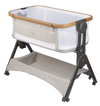
The Joie Kubbie Sleep is the standout bedside-style option because it is built for room-sharing away from home. A side-access design makes the cot feel more like a temporary bedside crib than a distant portable sleep box, which can be a relief for night feeds and settling. The raised mode helps keep lifting gentle, and the layout is reassuringly straightforward for parents who want a familiar setup in a hotel room or at grandparents’ house. The mattress is firm, the mesh sides support ventilation, and the overall design feels purposefully newborn-friendly.
Compared with a standard travel cot, the big win is convenience at night. The baby sleep expert logic is simple: less awkward lifting often means less disturbance for everyone. That said, bedside-style travel cots still need to follow the manufacturer’s guidance carefully, especially around attachment and age limits. They are not a full replacement for every bedside crib, but for short trips they can be much more practical than floor-level cots. Families who want closeness and flexibility in the newborn stage will appreciate that balance.
Review the best newborn-friendly 3-in-1 option
The Tutti Bambini CoZee Go is the strongest 3-in-1 style pick for families who want a bassinet, travel cot, and playpen in one package. That versatility matters in the first six to twelve months because needs change quickly: one month it is all about the newborn insert, the next it is daytime containment while a parent showers or packs the car. Included accessories can reduce extra purchases, which helps if budget and storage space both matter. The setup is still manageable, and the cot feels more multi-functional than many standard travel cots.
The trade-off is that all-in-one designs can become less compelling later, especially once a baby is moving more freely or if toddler use becomes a priority. A 3-in-1 cot often carries a bit more bulk, and some parents end up paying for features they only use in the early stage. Still, for families looking for one practical sleep space for a baby or toddler that works from birth and can double as a playpen, this kind of cot is easy to recommend. It is especially appealing for parents who want fewer separate products cluttering the house.
Best Travel Cots for Portability and Folding
Explain folding styles and why they matter
Folding style shapes daily frustration more than most people expect. Quick fold systems are usually the easiest when packing away in a rush, while pop-up frames can feel fast once learned but awkward on the first few tries. Traditional folding cots may be sturdier or more affordable, but they often involve more steps and a stronger learning curve. Some models let the mattress stay attached, which saves time, while others need the mattress packed separately. Between trips, the folded size matters just as much as setup speed because the cot may live in a cupboard, hallway, or car boot.
Review the best quick-fold travel cot
The Bugaboo Stardust also wins here because it is one of the quickest setup cots to handle in real life. First-time setup is sensible and repeat use gets even easier, which matters when grandparents or babysitters need to use it too. The one-handed style convenience is a genuine benefit when holding a baby, and the overall sequence feels more intuitive than the old-school “pull, click, bend, wrestle” routine some travel cots still demand. For parents who dislike wrestling with metal frames at bedtime, the difference is immediate.
The main learning curve is in trusting the mechanism and remembering the fold sequence the first few times. That is normal with any quick fold design. Once learned, the cot is especially helpful for frequent travel because the speed reduces stress and makes use more likely. It is not the absolute smallest or lightest option, but it earns its place by being easy to set up and easy to pack away without a lot of fuss. For sleep-deprived households, that kind of simplicity is worth paying for.
Review the most compact travel cot for small storage spaces
The Joie Kubbie Sleep is also a strong compact pick because its folded footprint is manageable and it fits more easily into smaller homes. That matters for families storing the cot under a bed, in a cupboard, or in the boot alongside other baby kit. Compact cots are especially helpful when only one spare room exists and the travel cot has to vanish between visits. The design is not as tiny as some ultra-light portable crib styles, but it offers a better mix of compactness and usefulness than many full-size alternatives.
There is always a trade-off with compact storage. A smaller folded shape can mean a more limited sleep area for older babies, so parents should check whether the cot feels too short before toddlerhood. If the main use is short hotel stays, family weekends, or occasional home backup, that trade-off is usually acceptable. The best compact travel cot is not just the one with the tiniest packed size; it is the one that still feels comfortable enough to use without frustration.
Best Travel Cots by Use Case
Best travel cot for frequent travellers
The Bugaboo Stardust is the obvious frequent traveller pick because repeated use rewards its speed, quality, and tidy folding design. A family that travels often will feel the difference between a cot that is pleasant to set up and one that becomes a chore after the third trip. Premium price makes more sense when the cot is used constantly, especially if it needs to work at home, in holiday accommodation, and at relatives’ houses. The frame feels durable, the sleep space is stable, and the setup is quick enough to reduce bedtime drama.
Frequent travellers also benefit from reliable pack away performance. A cot that folds neatly every time and carries well in its bag is less likely to get left at home because it feels too awkward. Compared with cheaper models, the long-term comfort and build quality help justify the spend. This is the type of product that earns goodwill over time, not just on day one. It suits holidays and home use equally well, which is useful when a single travel cot has to do a lot of jobs.
Best travel cot for occasional family visits
The Red Kite Sleeptight works well for occasional family visits because simplicity is the whole point. When a cot is only needed for weekends away or a handful of overnight stays, easy assembly and decent value matter more than premium extras. A basic model can be entirely enough for short-term sleeping, particularly if the baby is still small and the sleep environment is quiet. There is less to learn, less to clean, and less to store between trips.
That makes the Red Kite style of cot attractive for homes with limited space. It can be packed away without becoming a permanent fixture, and the lower price makes it easier to justify as a backup sleep space. The mattress is more basic, but for occasional use that compromise may be perfectly acceptable. Parents who only need the cot for a few nights a year generally do not need the most advanced frame on the market.
Best travel cot for playpen use
The Tutti Bambini CoZee Go is a strong playpen choice because it offers a roomy, sturdy area that can work beyond sleep. A travel cot becomes more useful as a daytime safe space when a baby starts crawling and needs somewhere enclosed while adults make food, unpack, or answer the door. Side access is especially useful once mobility increases because it makes interaction easier without lifting the baby in and out constantly. Sturdy construction matters more here than clever folding tricks.
Not every travel cot is truly suited to playpen use. Some are fine for sleep but feel too narrow or too delicate for active daytime containment. A good playpen-style travel cot should feel solid on the floor and give enough room for a few toys without becoming cramped. Families planning long stays or needing a practical sleep space for both naps and play will get more value from a model designed for multi-use.
Best travel cot for hot climates
The BabyBjörn Travel Cot Light and the Nuna Sena Aire are both strong hot-climate picks because breathable mesh and ventilation are central to their design. When staying in warm rooms or travelling abroad, overheating concerns make airy models more appealing than heavily padded alternatives. Better airflow can make a noticeable difference during naps and at night, especially when the room is warm and the baby is sleeping for longer stretches. Mesh sides also help parents monitor the baby without disturbing them too much.
For travel abroad, it is also worth thinking about sun, insects, and room layout. A cot with excellent ventilation is only half the story if the room itself is too hot or if the sleep area is poorly placed near a window. Extra fabrics, thick inserts, or unnecessary accessories can reduce airflow, so simple designs often work best in hotter conditions. Breathability is one of those features that sounds minor until it matters a lot.
Best travel cot for grandparents’ house
The Joie Kubbie Sleep is a practical grandparents’ house choice because it is easy for other adults to set up without lengthy instructions. Intuitive folding, clear steps, and a familiar bedside-style layout make it less likely that the cot will sit in the hall waiting for someone to work out how it goes together. This matters because grandparents may use it less often and want something obvious rather than clever. A straightforward design is usually the most reliable option for shared family use.
Some families even leave a semi-permanent travel cot at grandparents’ home if visits are frequent enough. That can be a sensible solution if storage space allows and the model is compact when folded. The main goal is to avoid making every visit feel like a furniture assembly exercise. A cot that is comfortable, easy to carry, and simple to store between visits tends to get used more consistently, which is exactly what a backup sleep space should do.
Travel Cot Comparison Table Guide
Explain what readers should compare before buying
The most useful comparison points are often the least glamorous: folded size, unfolded size, weight, age range, mattress type, and whether a fitted sheet is included. Headline portability claims can be misleading if the cot still takes up half a cupboard or feels awkward in a boot. Value should be judged against features as well as price, because a simple low-cost design can be better than a pricier cot with extras that never get used. A compact travel cot is only useful if it fits the family’s actual travel habits.
| Model | Folded size | Weight | Age range | Key feature |
|---|---|---|---|---|
| Bababing Bedside & Travel Crib/Cot | Compact | Moderate | Birth to 6 month or 9Kg | No Assembly/Compact/ Multiple Height Adjustments |
| Silver Cross Slumber | Compact | Moderate | Birth to toddler | Best overall balance |
| Bugaboo Stardust | Compact-medium | Moderate | Birth to toddler | Quick fold |
| BabyBjörn Travel Cot Light | Very compact | Light | Birth to toddler | Easy to carry |
| Red Kite Sleeptight | Compact | Light | Birth to toddler | Best budget value |
| Joie Kubbie Sleep | Compact | Moderate | Newborn to toddler | Bedside-style access |
What to Look for in the Best Travel Cot
Choose the right size and age range
Age suitability matters more than many first-time buyers expect. Some travel cots work from birth with a raised newborn insert or bassinet level, while others are better once a baby is a little older and able to sleep lower down. Weight limits and height limits also affect how long the cot feels useful, especially if the goal is birth to 15kg or birth to three years. Smaller portable crib styles are easy to carry, but a roomier model may last longer and feel less cramped once a baby starts rolling or standing.
It is easy to buy a cot that looks tiny and convenient but feels outgrown far too soon. That is why checking sleeping space dimensions matters more than vague marketing terms. If the cot will be used beyond the newborn stage, the extra room can make a big difference to comfort and longevity. Parents who want the cot to do more than a few early months should think beyond portability alone and look at how the baby might fit at six, twelve, or eighteen months.
Check portability, weight, and carry options
Weight shapes the whole travel experience. A model that feels lightweight in the house may become annoying once it has to be lifted into a car boot, carried up stairs, or moved through a station. The best carry bag or travel bag helps, but handles, shoulder straps, and backpack-style options can make a real difference if one adult is handling the kit alone. A carry-bag is only useful if the cot is manageable to load and unload without frustration.
Lighter is not always better. Very light frames can be less reassuring if stability suffers, particularly once a baby becomes more active. The right balance depends on how often the cot will be moved and who will be carrying it. A family travelling by car every few months can often accept more weight in exchange for comfort and space, while public transport users usually need every gram to count. Matching portability to actual travel frequency avoids disappointment later.
Assess mattress comfort and firmness
Travel cot mattresses are usually thinner by design because the cot needs to fold and stay portable. That does not mean every mattress is equally comfortable or equally supportive. The key is a firm, flat sleep surface that fits snugly and does not leave gaps. Loose extras should not be added, even if a travel cot mattress feels plain compared with a home cot. For safe sleep, simplicity is the point.
Some cots include a fitted sheet, while others need one bought separately. A better mattress can improve sleep without compromising safety, as long as it stays within the cot’s design. Ventilated mattress construction is especially useful in warmer rooms, and a tight-fitting sheet helps everything feel cleaner and more secure. Parents often notice comfort differences more than expected, particularly if the baby is settling for naps and overnight use across several nights in a row.
Look at folding, setup, and assembly ease
Ease of assembly can make or break a travel cot. Quick fold mechanisms reduce stress, and a model that pops up or locks into place with fewer steps is usually the one that gets used most often. Some cots are excellent once learned but have an awkward first setup, which is why clear instructions matter so much. One-person setup is a real advantage, especially for parents who may be juggling a baby, luggage, and the clock at the same time.
Grandparents and babysitters benefit from simple operation too. If a cot is too fiddly, it becomes a source of reluctance rather than help. The best designs avoid obscure clips or hidden steps and instead rely on predictable motion and clear locking points. A cot that is easy to assemble and easy to set up is often worth more than one with a few extra features that look good online but slow bedtime down in practice.
Consider extra features only if you will use them
Extras can be useful, but only when they solve a genuine problem. Changing table attachments help during the newborn stage, wheels can improve room-to-room movement, and side zips may make the cot more flexible as a playpen. A newborn bassinet or raised newborn insert can also be valuable, especially if the cot will serve as a bedside crib substitute while travelling. The right accessory can make life easier; the wrong one just adds bulk.
That trade-off matters because extras often make the cot heavier, more expensive, and less compact. A multi-functional design makes sense for families who will genuinely use every mode. For occasional trips, a simpler travel crib may be the better buy. The best travel cots are not the ones with the longest feature list; they are the ones that fit the household’s actual routine without creating more packing and setup than necessary.
Are Travel Cots Safe for Newborns?
Cover the safest way to use a travel cot
Travel cots can be safe for newborns when they are used correctly and kept simple. The sleep surface should be firm and flat, with a tight-fitting sheet and no loose blankets, pillows, toys, or padded extras inside. Ventilation matters too, which is why mesh sides are common on good travel cots. The cot should be placed away from heaters, cords, and anything that could create a hazard. Safe sleep guidance for a portable sleep space should match home crib guidance: clear, uncluttered, and stable.
Parents sometimes assume a travel cot needs extra softness to be “more comfortable,” but for newborn sleep the opposite is true. A clear safe space is the priority, not a padded nest. If the cot is being used in a hotel room or at a relative’s house, it is worth checking the room layout before setting it up. Even a good travel cot becomes a poor sleep environment if it is squeezed next to curtains, cords, or warm appliances.
Explain when newborn inserts and bedside modes help
Raised levels can be a big help in the newborn stage because they reduce bending and make settling easier. For a parent recovering from birth, that small height difference can feel surprisingly valuable during night feeds and repeated transfers. Bedside modes are helpful for reassurance and room sharing, but they still need to follow manufacturer guidance exactly. The cot should be secure, properly attached if required, and used within the stated limits.
Newborn inserts or bassinet modes are not always essential if the cot already offers a safe raised sleep level. What matters is whether the feature genuinely solves a problem rather than simply looking useful in product photos. Age and weight limits should always be checked carefully, because these modes are usually temporary. Once a baby outgrows the insert, the cot should still function as a stable sleep space without any added parts.
How to Help Your Baby Sleep Well in a Travel Cot
Make the cot feel familiar before you travel
Babies often settle better when the travel cot is not a complete surprise. Practising naps or bedtime at home helps the sleep space feel familiar before the first overnight trip. A sleep sack, comforter, or other familiar sleep association can also make the cot feel less strange. Familiar smells and routines help too, which is why a few short practice sessions can be worth the effort before a holiday or family stay.
This does not need to be complicated. Even one or two daytime naps in the travel cot can help a baby understand that it is a normal sleep space rather than something unusual. For newborns, the goal is simply to reduce disruption. For older babies, a gentle routine around the cot can make the change feel easier and reduce the chances of a late-night protest when travelling.
Set up the sleep environment for better rest
Room temperature, darkness, and white noise all play a part in helping sleep happen more smoothly. A breathable fabric cot with good airflow is more comfortable in warm rooms, and a calm setup away from cords or heaters makes the space feel safer too. The bedding should be age-appropriate and minimal, with no extra padding. For newborns, the simplest environment is usually the best one.
Older babies may respond well to a familiar bedtime rhythm, while newborns usually need a quieter, more controlled environment with less stimulation. A compact travel cot can still sleep well if the room is calm and the baby is not overheated. The trick is to make the travel cot feel like part of the usual routine rather than a special event, because most babies settle more easily when the surroundings stay predictable.
Travel Cot Prices and Value for Money
Explain what different price points usually buy
Budget travel cots usually cover the essentials: a safe frame, basic mattress, and straightforward folding. Mid-range options tend to add better materials, improved comfort, and more polished setup systems. Premium convenience models often justify their price through faster folding, lighter carry, or more refined design rather than dramatically different sleep safety. In other words, the extra money usually goes into convenience and user experience rather than dramatic changes in core function.
For occasional use, simple functionality can be enough. If the cot is only needed a few times a year, paying for a premium quick fold may not make sense. Cost per use is often the best way to judge value for money. A slightly pricier cot that lasts through several stages of a baby or toddler’s growth may be a better purchase than a cheap one that feels annoying after the third trip.
Show when splurging is worth it
Families who travel frequently tend to get the most out of premium portability or comfort. If a cot is used on holidays, at grandparents’ houses, and as a second sleep space at home, build quality and ease of use become more valuable. A durable model can also be cheaper in the long run than replacing a flimsy cot later. That said, added features only matter when they solve a real problem, such as back strain, storage limits, or a need for faster setup.
Value for money depends on the baby’s age and how often the cot will be moved. A newborn-only phase may not justify an expensive model unless room-sharing and nighttime access are especially important. Families with older babies or multiple children may find that a sturdier cot pays for itself through repeated use. The right answer is rarely the cheapest or the most expensive one; it is the model that fits the family’s travel habits best.
Travel Cot FAQ
Answer the most common buying questions directly
Can a travel cot replace a bedside crib or permanent cot? Sometimes, but not always. A travel cot can work as a backup sleep space or a newborn sleep solution for trips, especially if it includes a raised insert or bedside-style access. For regular home use, many families still prefer a bedside crib in the early months and a full cot for longer-term sleep. What age can a baby sleep in a travel cot safely? From birth is possible if the model is designed for it and used correctly, but always check the manufacturer’s age and weight guidance. Can you use a travel cot as a playpen? Yes, if the model is sturdy enough and intended for that use. Should you buy second-hand? Only if it is in excellent condition, fully compliant, and comes with the correct mattress and instructions.
Address practical travel and setup questions
How do you put up a travel cot quickly and correctly? Read the instructions before the first trip, practise at home, and check that every lock clicks into place before use. Can a travel cot fit in a car boot or airplane baggage allowance? Usually yes, but the exact size and weight matter, so folded dimensions should be checked rather than relying on generic portability claims. Do travel cots need separate mattresses or fitted sheets? Some include a mattress and sheet, while others do not, so this needs checking before buying. How do you clean and store a travel cot between trips? Wipe-clean fabrics, breathable mesh sides, and a dry storage space are ideal. Let the cot dry fully before packing away to avoid damp smells or mildew.
Final Verdict: Which Travel Cot Should You Buy?
Summarize the strongest picks by buyer type
The best all-round travel cot for most families is the Silver Cross Slumber because it balances safety, comfort, portability, and everyday practicality without leaning too hard in one direction. The best budget option is the Red Kite Sleeptight for families who want a simple, safe, good-value backup. The best newborn choice is the Joie Kubbie Sleep for room-sharing and easier night access, while the best lightweight pick is the BabyBjörn Travel Cot Light for anyone prioritising easy carrying over extras. Choose by age, travel frequency, and how often the cot needs to move, and the right answer becomes much clearer.